Safety at the wood-burning stove: clearances, floor plate, CO detector and cooker hood
A stove is safe if a few rules are followed. The most important points on clearances, spark protection, carbon monoxide and ventilation – summarised clearly.

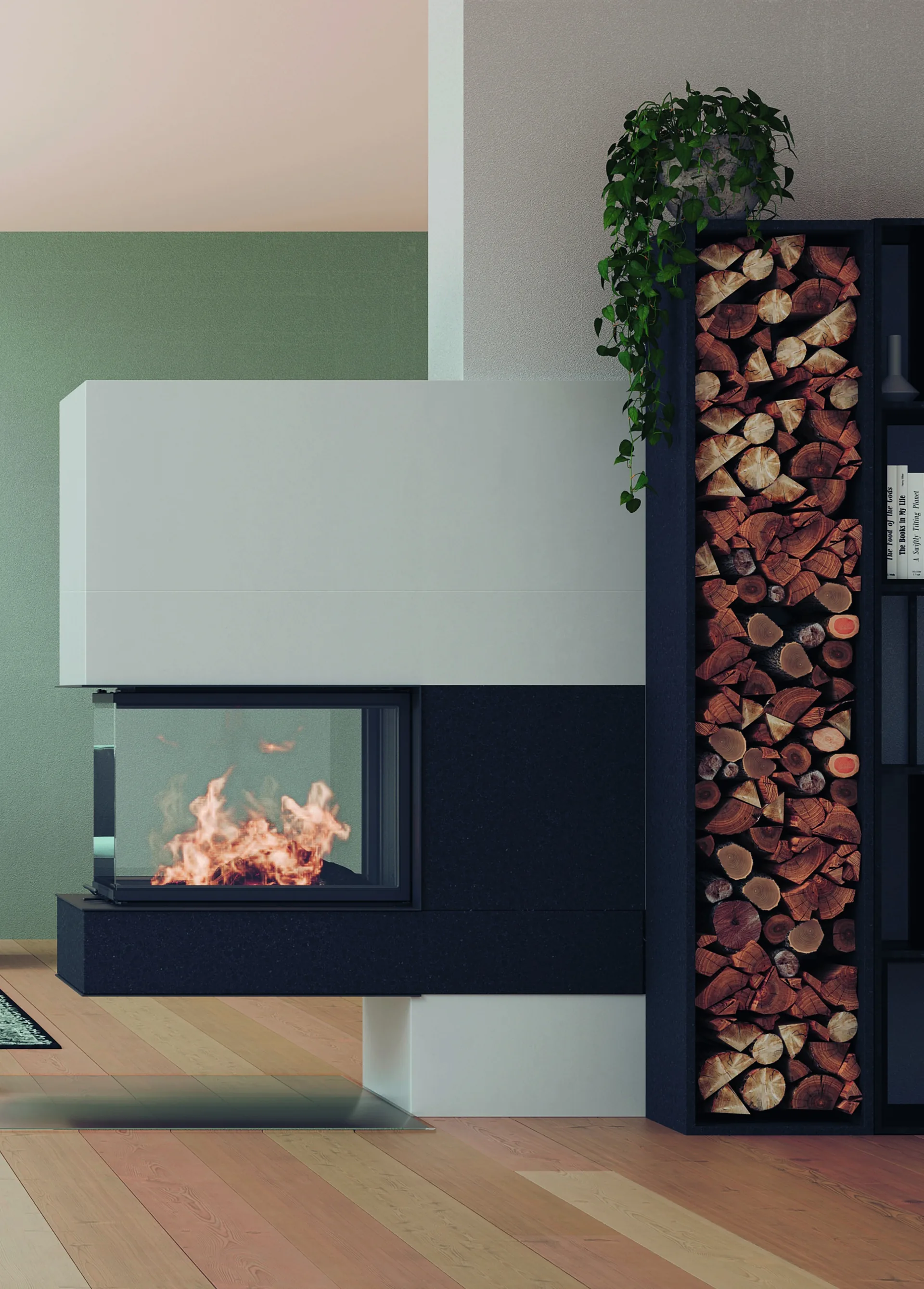
A professionally installed stove is a safe thing. To keep it that way, a few things matter in everyday use. Most of them are quickly explained. ## Distance to furniture and decorations In front of the viewing glass, a stove radiates a lot of heat. No sofas, curtains, log baskets or decorations may stand in this area. How large the distance must be is stated in the operating manual and on the type plate of your stove. Often it is around 80 cm to the front and considerably less to the sides and rear. Follow the manufacturer’s specifications. They still apply if you rearrange the room later. ## The floor in front of the stove If the stove stands on wood, laminate or carpet, a non-combustible floor plate belongs in front of it, for example made of glass, steel or stone. It must extend a little beyond the firebox opening to the front and to the sides. Usually around 50 cm to the front and 30 cm to the sides. If embers fall out when adding wood, they land on the plate instead of on the parquet. ## Carbon monoxide: invisible and odourless Combustion produces carbon monoxide (CO). Normally it is reliably drawn off through the chimney. In the event of faults, such as a blocked chimney or strong negative pressure in the room, it can enter the home. You cannot smell it. A CO detector in the installation room costs little and gives a warning in good time. Mount it as specified by the detector’s manufacturer. ## Extractor hood and ventilation system An extractor hood in exhaust mode or a ventilation system can create negative pressure in the house. The room may then draw flue gas out of the stove instead of air going up the chimney. In such cases a safety device is needed, for example a window contact switch or a negative pressure monitor, or a stove that is approved for operation with a ventilation system. We clarify what applies in your case with your chimney sweep. ## In everyday use - Only open the stove door for lighting, adding wood and cleaning. - Only store wood where the manufacturer intends, for example in the log store. Otherwise keep a sufficient distance. - Only remove ash once it has cooled down, and keep it in a metal bucket with a lid. Embers can stay alive in it for days. - Keep small children and pets away from the hot stove; a safety guard can help. - Never light the fire with methylated spirits, petrol or liquid barbecue lighter. When we hand over your stove, we go through these points together with you. Do you already have a stove and are unsure whether everything is right? Ask us.