Primary air, secondary air, tertiary air: what the air does in a wood-burning stove
Why does the fire sometimes smoulder and sometimes race away? Usually it comes down to the air. We explain the three air paths in a wood-burning stove and when to use which slider.
Air sliders on wood-burning stoves are often operated by feel. But behind them there are up to three separate air paths, and each has its own job. If you know them, you will understand more quickly why the fire sometimes smoulders and sometimes races away.
Primary air: the starter
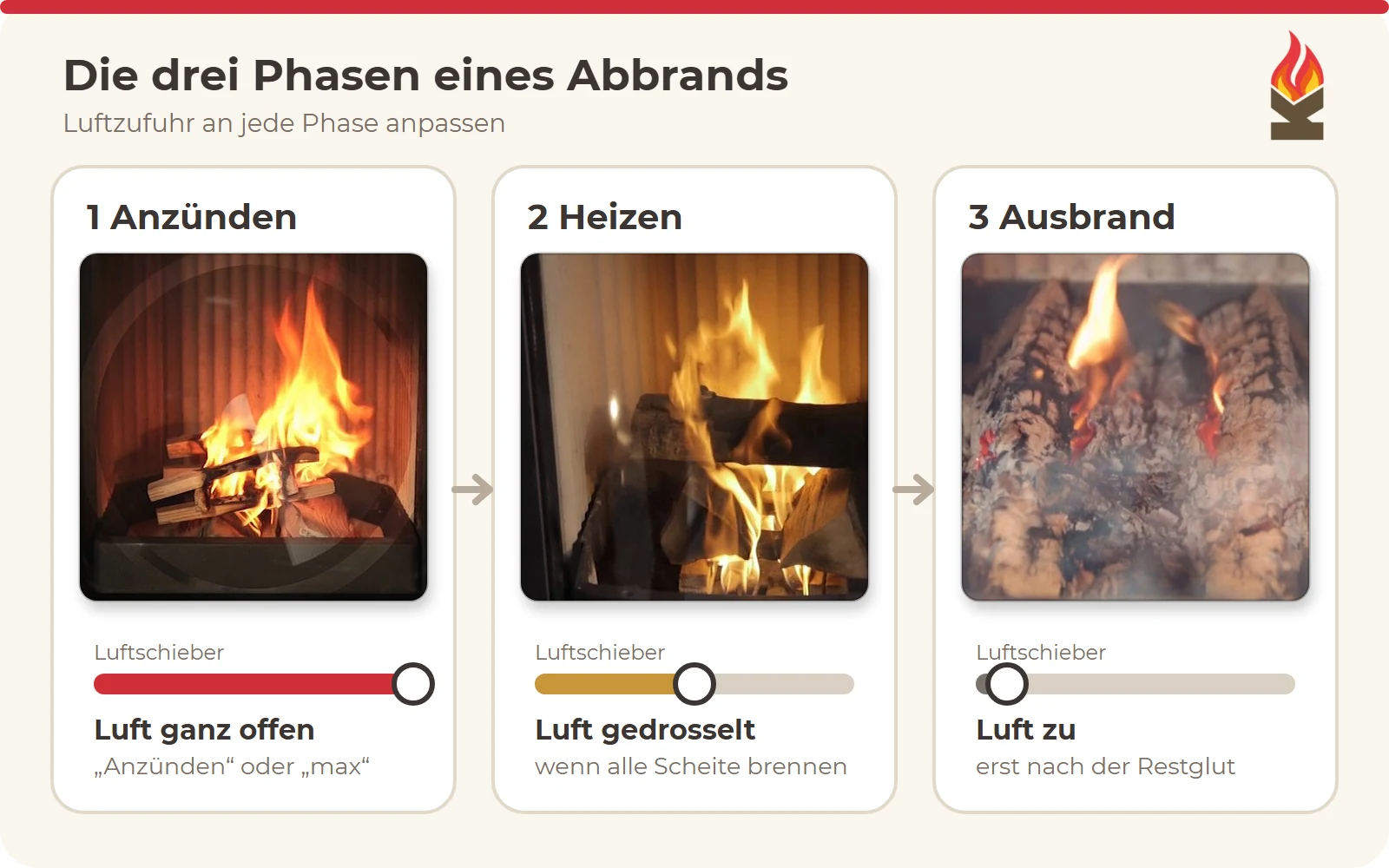
Primary air usually enters the combustion chamber from below, through the grate. It gets the fire going and is therefore particularly important when lighting up. Once every piece of wood is in flames, turn it down until it is fully closed. The actual burn runs without primary air.
If it stays open for too long, the wood burns down very quickly and very hot. Over time, this can damage the stove. If you close it too early, the fire will not get going properly.
Secondary air: the main combustion air
Secondary air takes a detour. It flows upwards through channels in the body of the stove, is preheated on the way and then runs downwards along the glass from the top. This curtain of air keeps flames and soot away from the glass. That is why it should never be fully closed while the stove is in use; otherwise the fire smoulders and the glass turns black.
You can tell from the fire whether it is set correctly: the flames burn calmly and evenly, without sooty tips, and the glass and the firebox lining stay free of soot.
Tertiary air: the built-in afterburning
Many newer stoves also have air channels in the middle to upper part of the combustion chamber. This is where unburnt gases are burnt off. There is nothing for you to adjust here.
How it all works together when you heat
- Lighting: open all air inlets fully, close the door, light the fire from the top.
- Heating up: gradually close the primary air as the temperature rises.
- Main burn: turn the secondary air down until the flames burn evenly.
- Adding wood: once the flames have gone out and there is still enough ember bed, open the air first, then the door. Add the wood and close the door again.
The most common mistakes fit into a single sentence: lighting from below, leaving the door open while lighting and not opening the air before adding wood.
Not every stove has three sliders
Some stoves control both types of air with a single lever. The position of the lever then determines how much primary and secondary air gets through. What each position means on your model is explained in the operating manual, and the manual always takes precedence. An automatic burn control takes these steps off your hands entirely.
Even the best setting will not help if the chimney does not draw or the wood is too damp. You can read more about this under Chimney draught and weather and Heating correctly with wood. If your stove still does not burn properly, we will be happy to take a look at it: 05374 66092.
Source: Spartherm blog of 28.07.2026 (blog.spartherm.com).